

Being able to enjoy your own private pool is something many families look forward to all summer long. However, for homeowners with a sloping or hillside backyard, that dream can feel out of reach.
The good news is that a sloped yard does not automatically rule out a pool. The key is choosing the right pool type, planning the site properly, and making sure the installation is designed for the conditions in your yard.
Quick Answer: Can You Put an Above Ground Pool on a Hill?
Yes, but a standard above ground pool is usually not the right choice for a sloped yard. For hillside installations, a semi-inground pool is typically the better option because it is designed to handle partial burial and the pressure from surrounding soil. The site still needs proper excavation, leveling, drainage, and installation according to the manufacturer’s instructions.
A Pool for the Hillside
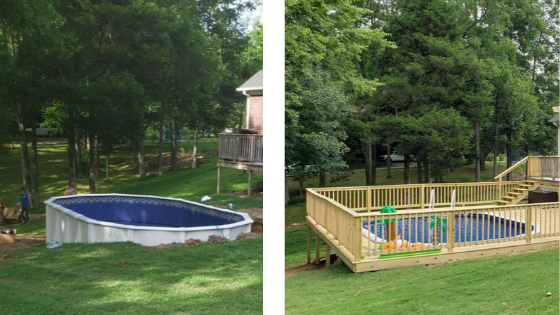
For decades, installers and homeowners had limited options when it came to adding pools to hilly yards. The introduction of semi-inground swimming pools gave homeowners a stronger, more flexible option than a typical above-ground pool.
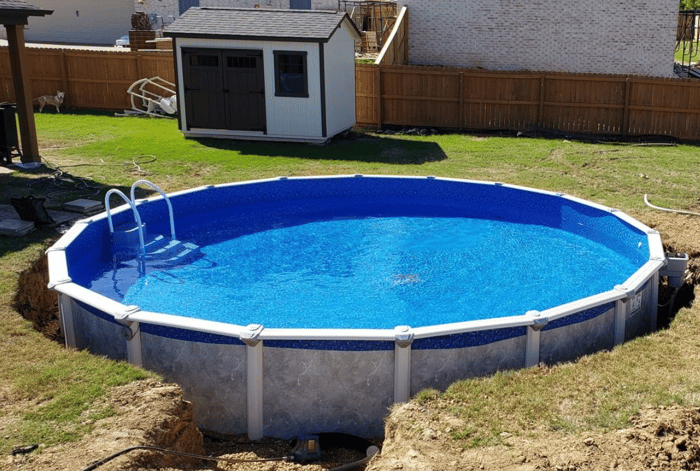
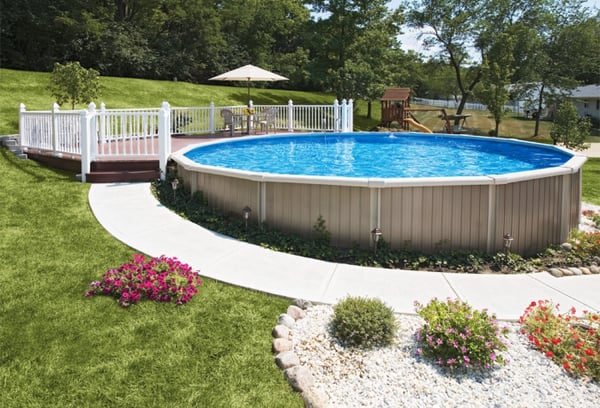
If you have a hill or sloping backyard, the best above-ground-style option is usually a pool specifically designed to be installed as a semi-inground pool. In simple terms, semi-inground pools are above-ground-style pools that can withstand the pressure of being partially buried when installed correctly.
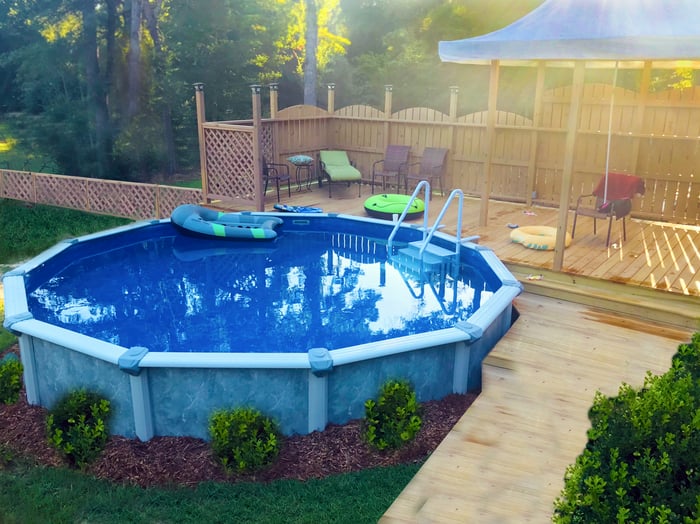
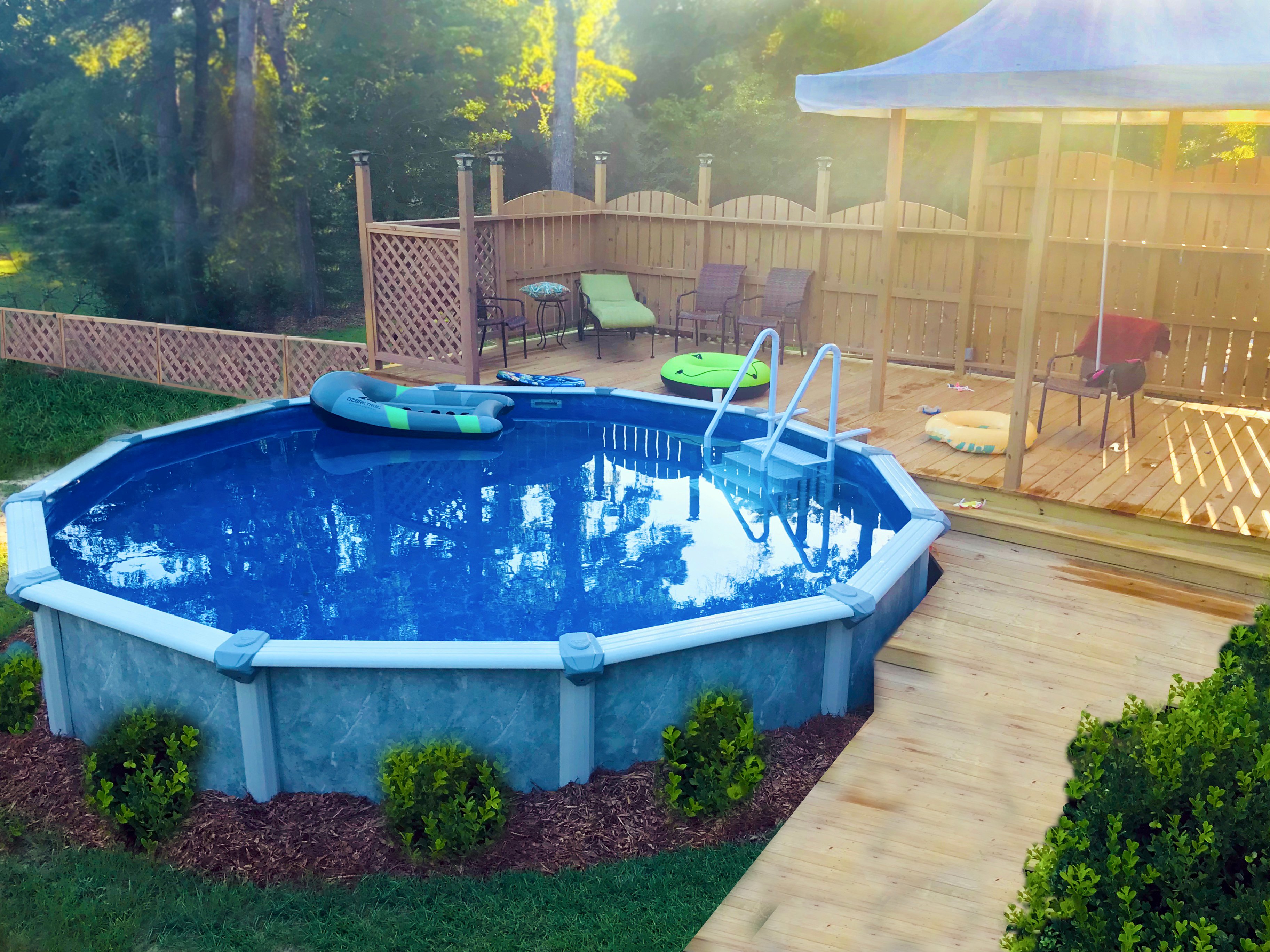
They are also a good fit for homeowners who want a more finished landscape design. Even if your yard is not steep, a semi-inground pool can create a cleaner, more integrated look while still offering many of the budget and installation advantages of an above-ground pool.

Pool Options for a Sloped Yard
Not every pool is designed to work on a hill. Use the table below as a quick way to compare common options before choosing a pool for a sloped backyard.
|
Pool Type |
Works Well on a Hill? |
Why |
| Standard Above-Ground Pool | Usually no | Not designed for burial or uneven soil pressure |
| Semi-Inground Pool | Yes, when installed correctly | Designed for partial burial and sloped-yard installations |
| Traditional Inground Pool | Yes | Fully excavated and engineered for underground installation |
| Partially Buried Standard Pool | Not recommended | Can damage the walls and void the warranty if not rated for burial |
Semi-Inground Swimming Pool: The Ideal Model
Installing a semi-inground swimming pool kit is often faster and more manageable than installing a traditional inground pool kit. These pools can also work well in yards where a fully inground pool may be more difficult, time-consuming, or expensive to install.
Here are a few of the added benefits they provide:
- Semi-inground pools usually require less digging than a traditional inground pool.
- Dirt removed during excavation may be used as part of the backfill process when allowed by the installation instructions.
- Semi-inground pools can be a more affordable way to create a recessed or built-in pool look.
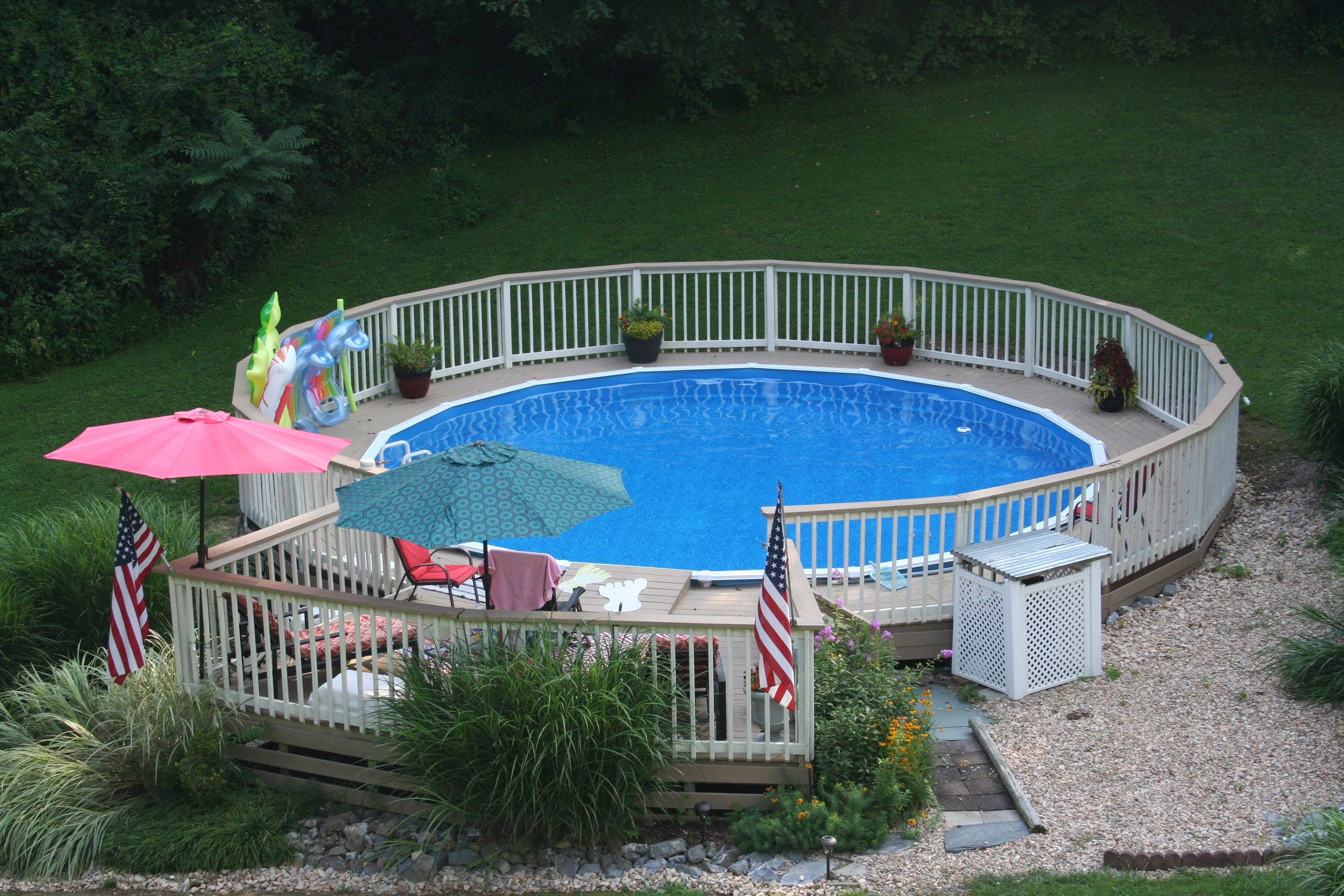
- These pools work especially well for yards with a high deck and a lower yard.
- A semi-inground pool can often be designed to match the height of an existing deck or surrounding landscape.
Planning Tip: Semi-inground pools can have longer lead times depending on the model, size, season, and availability. If you want your pool ready for summer, it is best to shop early and confirm current delivery timelines before planning excavation or installation. For more timing guidance, read our guide on the best time to purchase a pool.
Before You Install a Pool on a Hill
Before excavation begins, take time to review the yard, pool model, and installation requirements. A sloped-yard installation needs more planning than a standard flat-yard setup.
- Confirm the pool is rated for semi-inground installation.
- Review the manufacturer’s installation manual.
- Check soil type, slope, drainage, and available yard space.
- Call before digging to locate underground utilities.
- Keep the pool away from power lines, gas lines, and underground plumbing.
- Plan where the equipment pad, deck, stairs, and retaining areas will go.
- Make sure the pool base is level before installation.
- Consider hiring a professional installer for difficult slopes.
Safety Note: Sloped-yard pool installations require careful leveling, drainage, and soil support. Always follow the pool manufacturer’s installation instructions, check local code requirements, and work with a qualified installer when the slope, soil conditions, or excavation needs are complex.
The Installation Process
Keep the following in mind before and during the installation to ensure that the process is done right:
Know Your Backyard Conditions
The first thing you need to do is review your yard carefully. This includes the basics, such as soil composition, yard size, and yard shape.
You will also want to note how much it rains, how much room you have to build, how easy the soil is to dig, and where water naturally drains after a storm. These details can influence what type of pool you choose and how the site should be prepared.
Excavate the Area
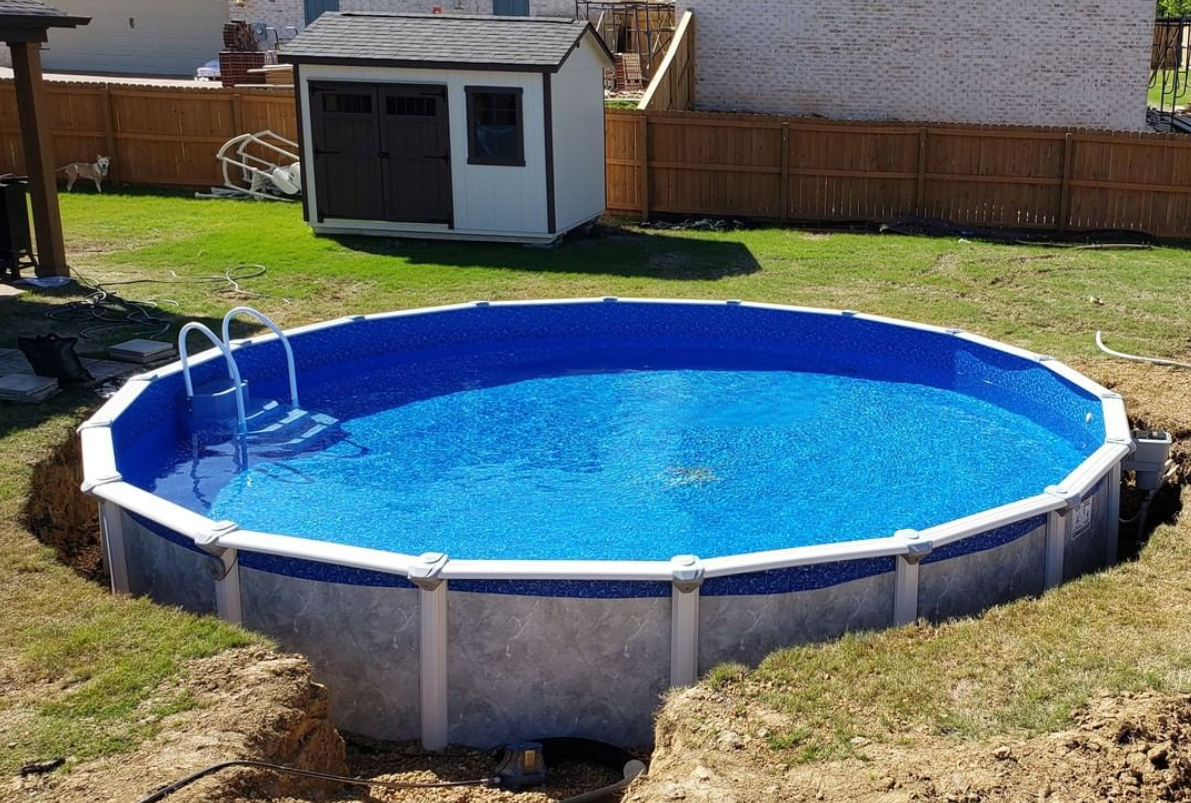
Even though the pool will be semi-inground, you will still need to dig. Before you start, take measurements and stake out where you want the pool. You should also visualize the surrounding area to make sure you have enough room for decking, access, equipment, and landscaping.
Keep the pool away from underground plumbing, gas lines, and power lines. Call before digging so utilities can be marked before excavation begins.
Once the area is marked, decide how deep the pool will sit in the ground. Use a measuring yardstick to verify the depth until you reach the planned level.
For good measure, dig down an extra 2 inches from your ideal bottom depth, then tamp the ground until it is even. Always follow the pool manufacturer’s instructions for excavation depth, base preparation, and leveling.
Follow Directions and Protect the Pool Area
The most important thing about preparing the semi-inground pool is following the instruction manual and making sure the pool area is properly set up.
Before installation begins, make sure the pool base is adequately protected. For a flat-bottom pool, a pool pad may help protect the liner. For a hopper-style pool, landscape fabric may be considered if additional protection is needed. However, when digging deeper for a hopper, some pool installations may not require this.
Always follow the product-specific installation instructions, since liner protection, base material, and backfill requirements can vary by pool model.
Find Your Dream Pool
There are pools available for different budgets, landscapes, and sloped-yard layouts. With the right planning, a hilly backyard can still become a comfortable place for summer swimming, relaxing, and spending time with family.
Buying a semi-inground swimming pool may be the answer if a standard above-ground pool is not suitable for your yard. These pools can help create a more finished look while working with challenging terrain.
For more information, check out our selection of semi-inground pools at Royal Swimming Pools. Our team can help you compare pool options and plan a design that works for your family, yard, and installation needs.
Learn How to Purchase Your Above Ground or Semi-Inground Swimming Pool!
Thanks for reading! For more information on semi-inground swimming pools, check out our additional resources below: