

Some folks find it interesting that not all above ground pools are the same depth. But even more surprising is that an above ground pool can even have a deep end.
There are a few key points to be aware of because what you order will determine what options you have. From wall height to liner type, each detail matters when you are trying to get the depth you want.
Keep reading for the details!
Quick Answer: How Deep Are Above Ground Pools?
Most above ground pools have wall heights of 48", 52", or 54", but the actual water depth is usually about 8" lower than the wall height. That means many above ground pools hold around 40", 44", or 46" of water. Some above ground pools can be made deeper with the right liner and ground preparation, but they should never be used for diving.

Above Ground Pool Wall Height and Water Depth
We offer above ground pools in three different wall heights: 48", 52", and 54". The idea here is that the taller your pool wall, the deeper your water can end up being.
This does not mean, however, that if you purchase a 52" wall, you will have 52" of water to splash in. Here’s why:
Typically, you will build the base of your pool up to have a 2" pool bottom. Pair this with the usual 6" from the top of the pool wall to the actual start of your waterline, since pools are not filled all the way to the top of the walls, and the water depth ends up being about 8" shallower than the wall height.
|
Pool Wall Height |
Approx. Water Depth |
Why It Is Lower |
|---|---|---|
| 48" wall | About 40" of water | Pool bottom and waterline reduce usable depth |
| 52" wall | About 44" of water | Water typically sits below the top of the wall |
| 54" wall | About 46" of water | Taller wall allows slightly more water depth |
Note: Actual water depth can vary depending on pool bottom thickness, skimmer placement, liner type, and how high the pool is safely filled.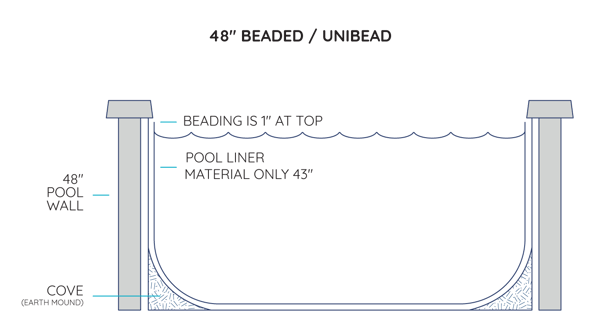
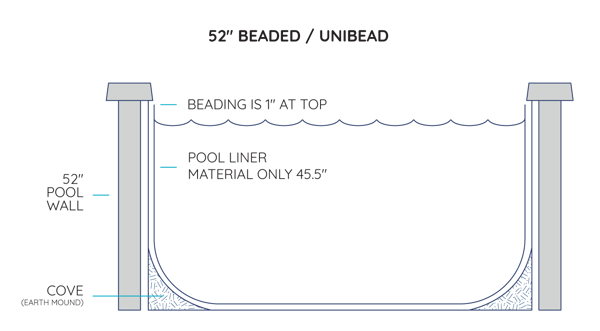
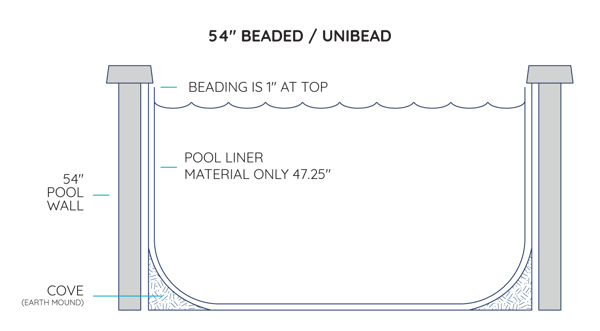
FUN FACT: The original purpose of taller pool walls was to provide additional privacy for swimmers. In other words, taller walls were not necessarily designed for deeper water levels, but for the wall to act more like a privacy fence. However, once taller walls became available, swimmers decided they preferred having more space under the water and quickly started filling their pools higher.
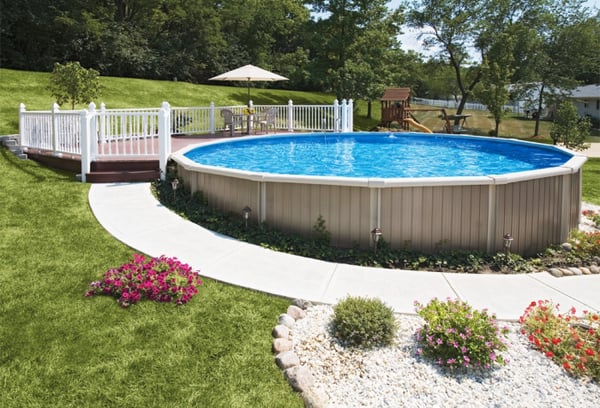
For this reason, all of the pools we offer have the skimmer cutout centered about 6" below the top of the wall to allow for maximum water depth. You may slightly increase the water depth further by filling the pool a little higher than the fill line indicator on your skimmer. Usually, 1" to 3" more is a safe allowance.
Keep in mind that there are some 52" and 54" pool walls with skimmer cutouts at the same height as a 48" pool wall. This design makes deeper water levels harder to achieve, but it can be a fair option if you prefer the older idea of using the pool wall as an added layer of privacy.
Older above ground pools are most commonly found in 48" wall heights, and most 48" walls sold industry-wide are meant to replace older pool walls. These days, the most common two heights sold are 52" and 54".
Today, we do not necessarily recommend a 54" wall over a 52" wall simply because there is not a lot of difference between them. It is literally about 2" of water depth. Instead, we recommend choosing the pool that fits your budget and comes in the color or design you prefer.
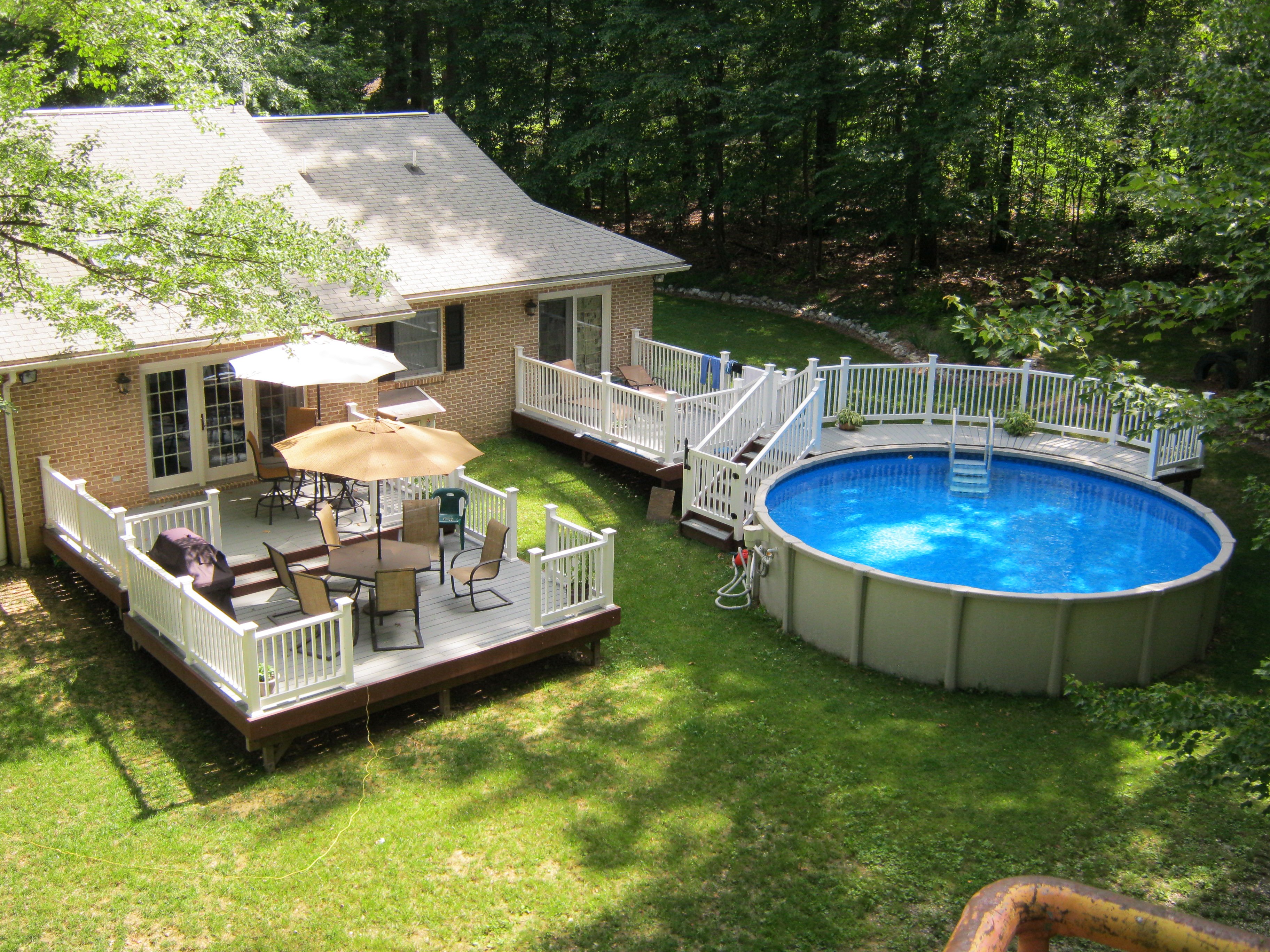
Flat Bottom Above Ground Pools
If a standard flat bottom is comfortable for you and your family, there are many liner options available, including overlap, J-hook, and beaded liners. Learn more in our complete guide to above ground pool replacement liners.
However, customers are often interested in learning how to make above ground pools even deeper, and there are multiple solutions for that.
A standard overlap liner can accommodate a slightly deeper end. The overlapping material and elasticity of the vinyl combine to safely increase the pool’s depth by about 5" to 10" in a gradually sloped deeper area. Some customers also install these to make the entire pool a couple of inches deeper.
While this option does not allow for a significantly deeper pool, it offers the widest variety of liner patterns and can provide a true 4' of water depth.
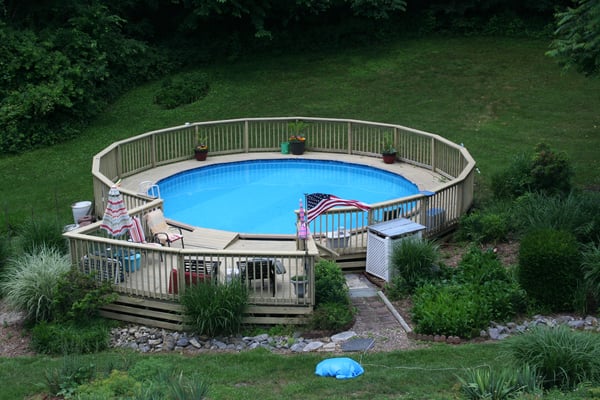
Older kids want a deeper pool to splash around in? This can be done with a 6' deep overlap-style liner. This type of liner has a longer wall section that can extend into a deeper well.
In the spirit of full disclosure, these liners do tend to produce wrinkles in the final installation. This is primarily an aesthetic issue. However, you do want to smooth them out as much as possible to help prevent problems when vacuuming the pool.
With pool sizes 15' round and larger, 6' overlap liners are offered as a selection in our pool kit builder or as a replacement liner. They are available in both solid blue and full print.
ABOVE GROUND POOLS WITH DEEP ENDS
The right liner makes a big difference when you want more depth from an above ground pool. Some liners are best for standard flat bottoms, while others are designed to stretch into a deeper well or hopper.
|
Liner Type |
Best For |
Depth Potential |
Watch-Out |
|---|---|---|---|
| Standard overlap liner | Slightly deeper flat-bottom pools | Can add about 5" to 10" in some setups | Limited depth increase |
| 6' deep overlap liner | Deeper well for larger round pools | Can support a deeper center or end | May produce wrinkles during installation |
| 7' expandable liner | Custom deeper sections or hopper-style bottoms | Offers the most flexibility | Requires proper excavation and installation |
| J-hook or beaded liner | Standard flat-bottom installations | Best for standard wall-depth pools | Not typically used for deep-end shaping |
Can Above Ground Pools Have Deep Ends?
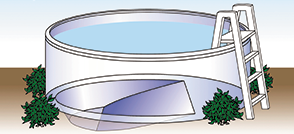 Want to practice snorkeling or host more challenging retrieval games? Consider digging a deep end and pairing it with a suitable liner.
An exciting option available for most sizes is the 7' expandable Lomart liner. These overlap liners are true expandable liners made with a higher ratio of plasticizers, which allows them to stretch into the deeper section, or hopper, that you have excavated.
This offers the greatest amount of flexibility because you can use this liner in variable depths and configurations. When installed properly, you can produce a smooth floor for the pool with minimal wrinkling.
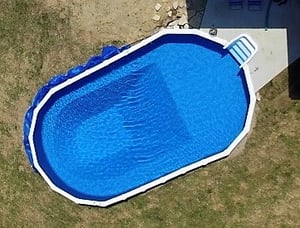
When designing your dig, there are general best practices to follow:
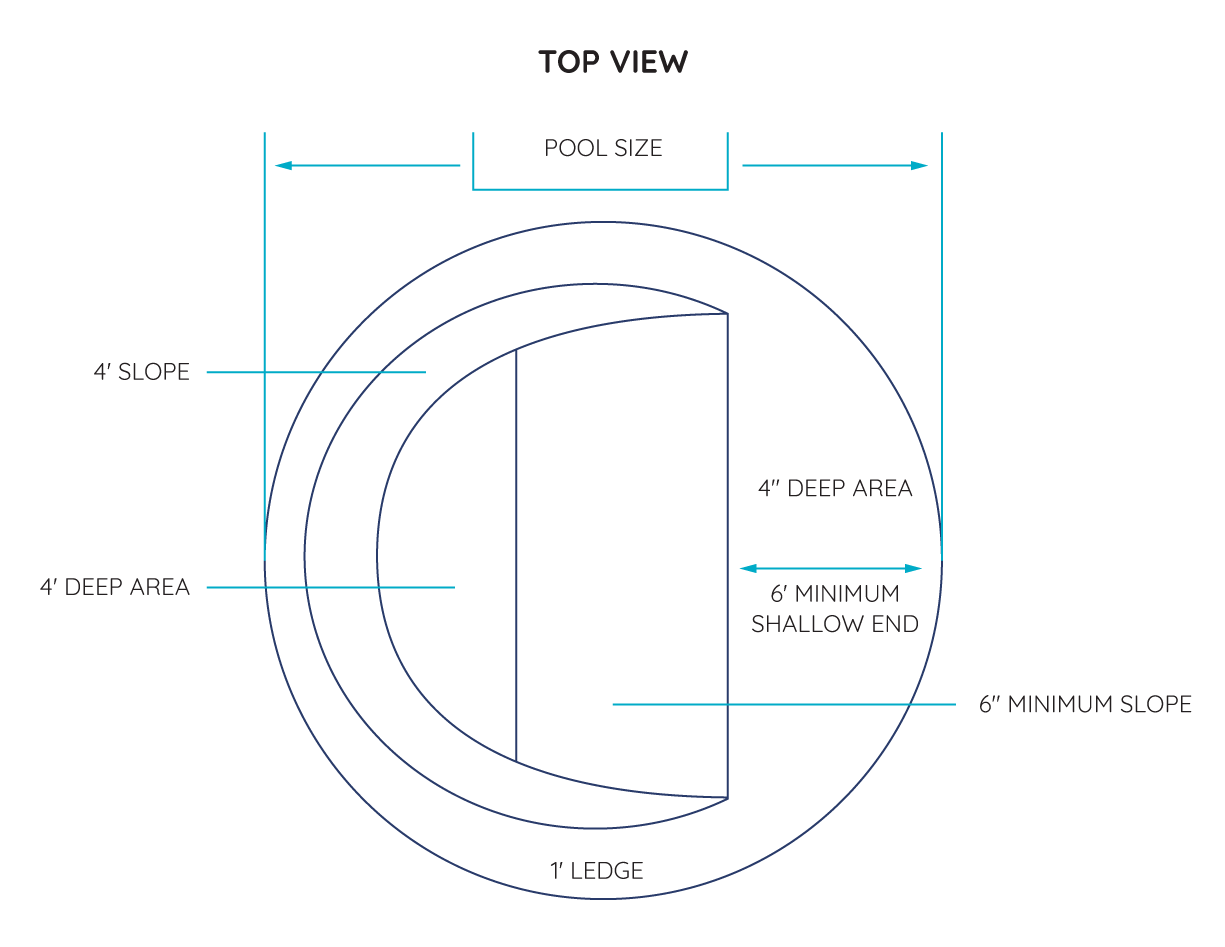
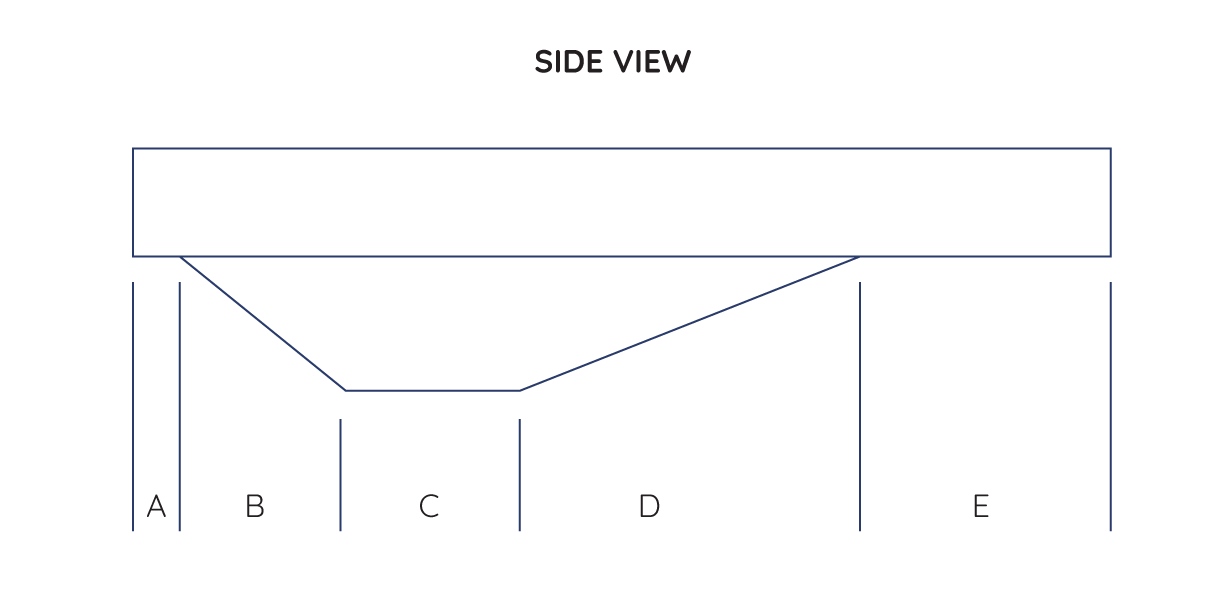
The front slope needs to be a minimum of 3' of slope for each 1' of drop, but it can be greater.
You will need enough flat area to accommodate your ladder or step.
The ledge also needs to be wide enough for the supports for your pool.
Safety Reminder: No matter how deep an above ground pool is made, it should never be used for diving. Above ground pools are not designed to meet safe diving requirements. If diving is a priority, an inground pool is the safer direction to explore.
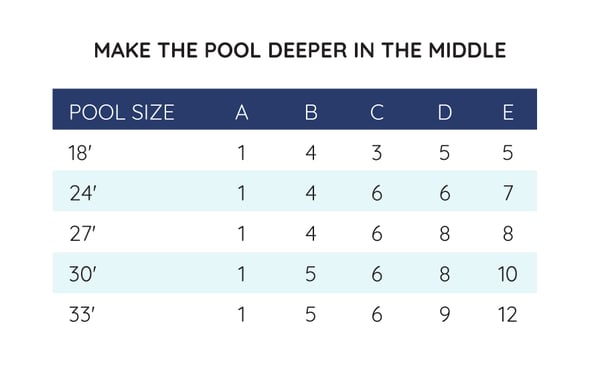
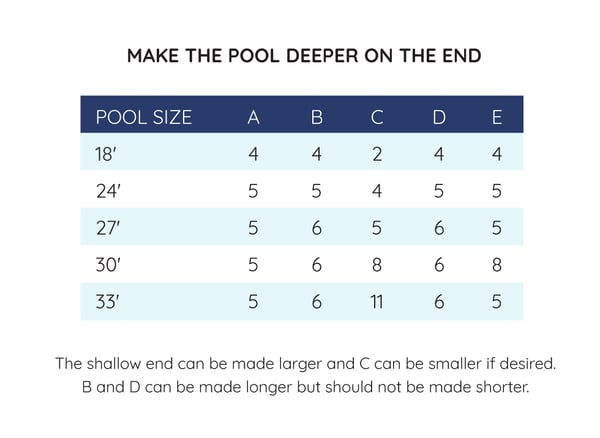
DEEPER ROUND POOL
For more details, view our complete guide on above ground pool deep end installation for round pools.
DEEPER OVAL POOL
For more details, view our complete guide on above ground pool deep end installation for oval pools.
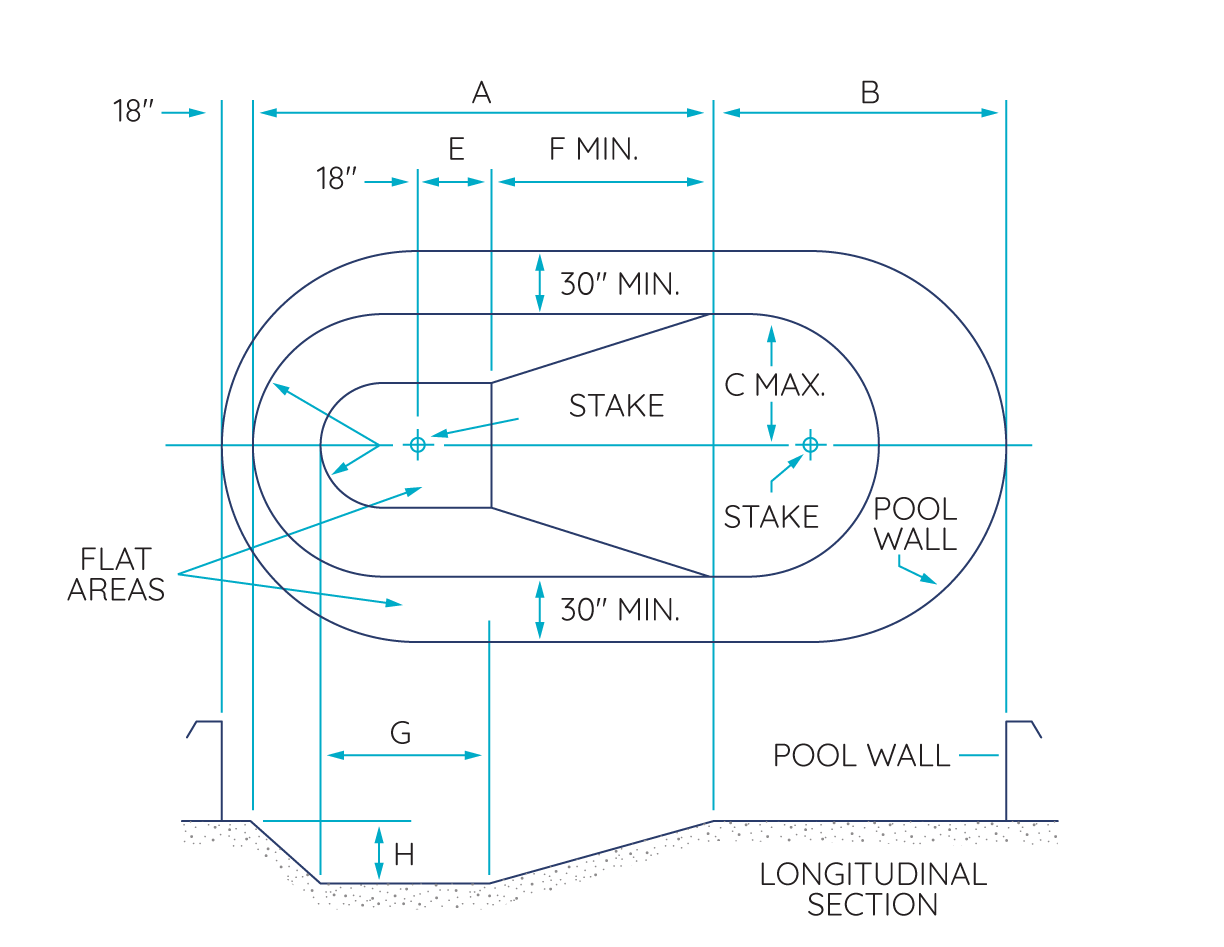
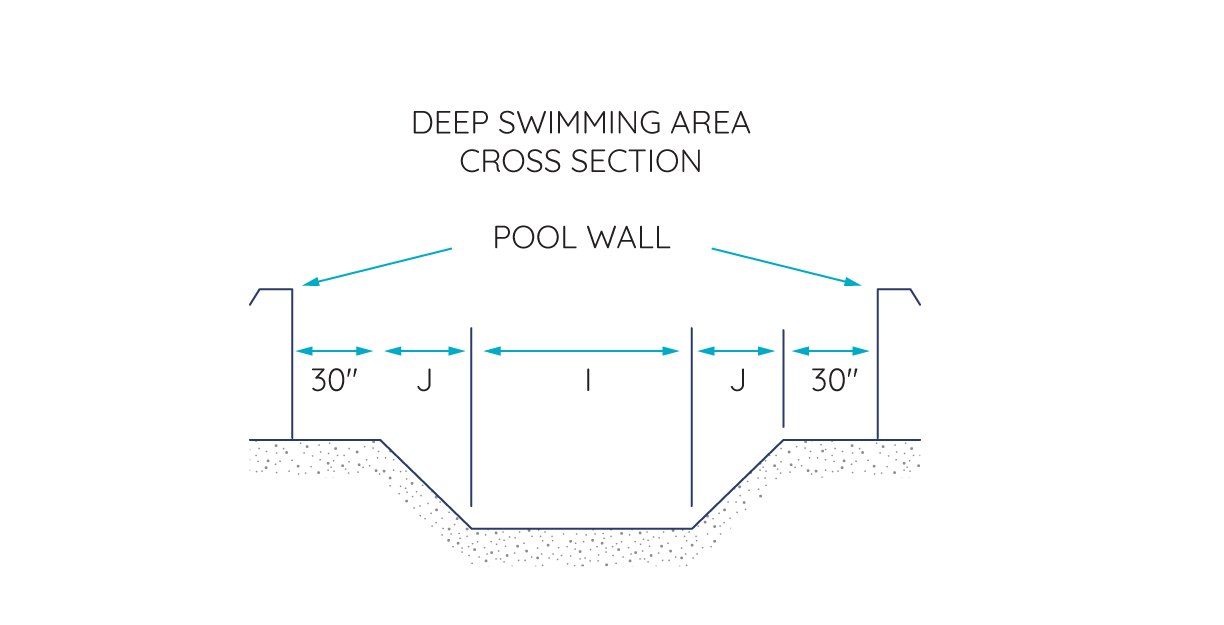
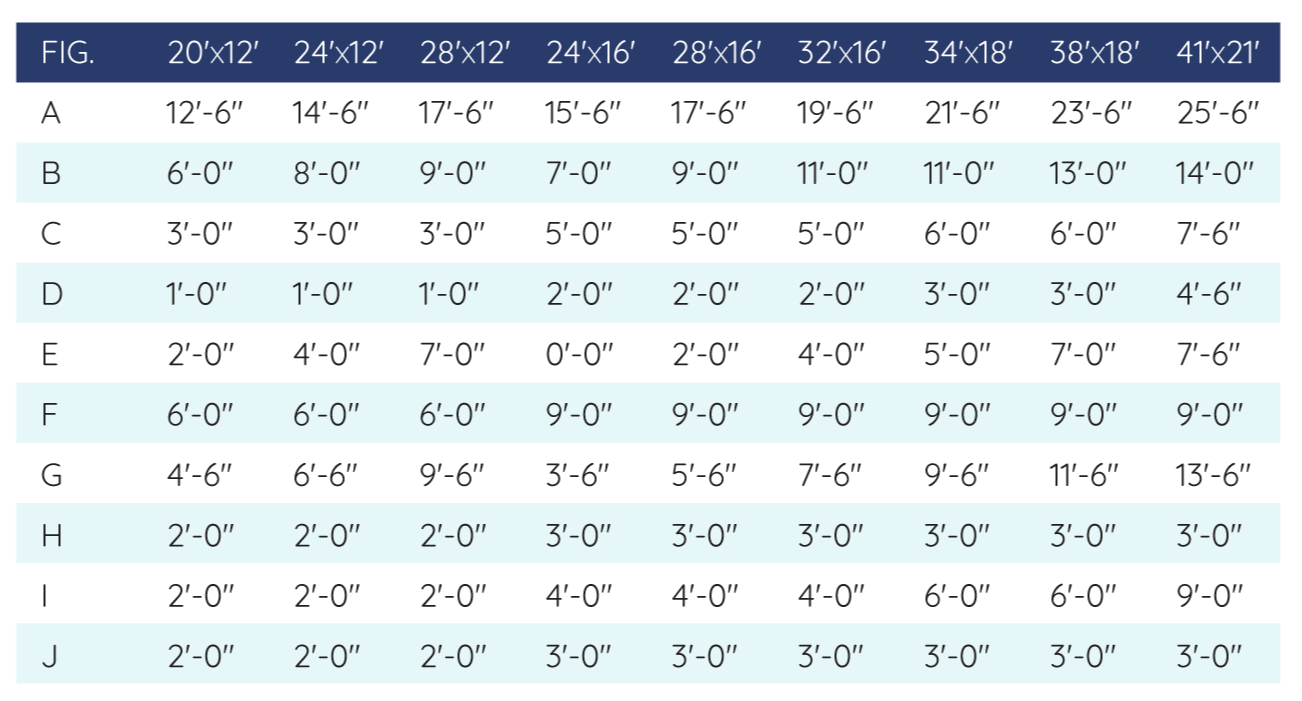
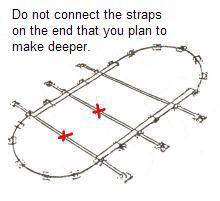
A round pool does make it easier to accommodate an above-ground-pool deep end because the structure of a circle does not require strap supports like most oval pools use.
Oval pools with straps can be safely modified to allow for a deep end by not connecting the straps you intend to make deeper and following these 4 steps.
Step 1
Use a post hole digger to dig an 18" to 20" deep hole directly in front of each side brace that will be on the deeper end of the pool. The hole should get wider as it gets deeper.
Step 2
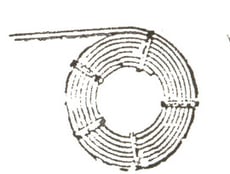 Tightly coil the strap back to within 15" to 18" of the hold-down plate. As you coil the straps, make sure you do not allow space between the coils. A tight coil will prevent the strap from tightening and the brace from leaning as the pool fills with water.
Tightly wrap wire around the coils to prevent the coil from springing loose.
Step 3
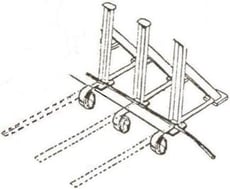
Put the coiled strap into the post hole.
You can put all three straps on each side in the holes for a middle deeper pool or two straps on each side for a deeper-on-one-end pool.
Step 4
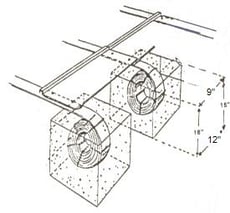 Mix approximately one bag of concrete mix for each hole, making sure that it is not a soupy mix. Use a stick or broom handle to pack the concrete into each hole and fill all voids. Check the side braces as you go to keep the top ledges straight.
As you can see, there are many options that will allow you to expand the possibilities for your above ground pool. These solutions are available with both new and existing pools. With a little additional ground prep and the appropriate liner, your family can still enjoy the backyard pool as they mature and grow.
That being said, no matter how deep you make your above ground pool, under no circumstance should you ever dive into it. These pools will not meet regulations for safe diving. If diving is your goal, you will want to invest in an inground pool.
Looking for additional resources? See below:
- Oval Pools: To Buttress or Not to Buttress, That is the Question.
- What's Better: A Round or Oval Above Ground Swimming Pool?
How Deep Are Above Ground Pools - Frequently Asked Questions
How deep is the water in a 52" above ground pool?
A 52" above ground pool typically holds about 44" of water. The actual water depth is usually lower than the wall height because of the pool bottom and the space between the waterline and the top of the pool wall.
Can an above ground pool have a deep end?
Yes, some above ground pools can have a deeper area when paired with the right liner and ground preparation. This depends on the pool shape, liner type, installation method, and whether the pool structure can safely support the deeper section.
What liner do I need for a deeper above ground pool?
For a slightly deeper pool, a standard overlap liner may work in some setups. For a deeper well or hopper-style bottom, you will typically need a compatible deep overlap or expandable liner designed for that type of installation. Always confirm the liner’s depth range, pool size compatibility, and installation requirements before ordering.
Is a 54" pool wall worth it over a 52" wall?
A 54" wall only adds about 2" of potential water depth compared with a 52" wall. For many pool owners, the better choice comes down to budget, pool design, color, availability, and liner options rather than depth alone.
Can you dive in a deep above ground pool?
No. Even if an above ground pool has a deeper area, it should never be used for diving. Above-ground and on-ground pool safety guidance consistently warns against diving because these pools are not designed for safe diving.