
Is a Semi-Inground Pool Worth It?
A semi-inground pool strikes a practical balance between the affordability of an above-ground pool and the clean look of a built-in design. It’s installed partially in the ground, which helps it blend better with your yard and work well on sloped terrain. Compared to a full inground pool, it’s quicker to build, easier to plan for, and much more budget-friendly. With the right planning—solid wall construction, proper drainage, and efficient equipment—it can be a lasting addition that’s easy to maintain.
It won’t fit every need. Semi-inground pools aren’t designed for diving or complex custom shapes, and they typically max out at a moderate depth. But for many homeowners, especially those managing space or cost, the tradeoffs are worth it.
- Ideal for sloped yards, moderate budgets, and DIY-friendly installs.
- Not ideal for diving use or highly custom, freeform shapes.
- Ongoing savings come from smaller water volume, lower energy needs, and shorter build timelines.
This guide explains what to expect from installation to upkeep, what it really costs, and how it compares to other pool types so you can decide what makes sense for your yard.
| What Is a Semi-Inground Pool? |
| Semi-Inground vs. Inground vs. Above-Ground Pools |
| Semi-Inground Pool Cost Breakdown |
| The Pros of Semi-Inground Pools |
| The Cons of Semi-Inground Pools |
What Is a Semi-Inground Pool?
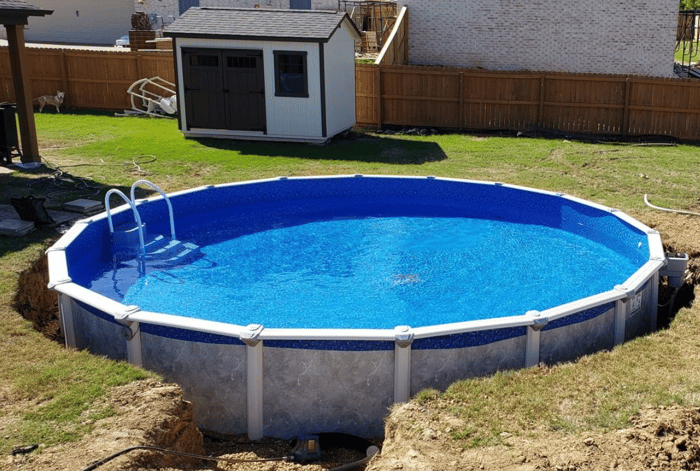
A semi-inground pool is built with part of the structure set into the ground and part left exposed, making it a flexible
option for a wide range of yards. It’s especially useful on sloped or uneven terrain, where a fully inground pool would require significant grading or structural reinforcement. By adjusting how deep the pool is set, homeowners can work with the existing landscape rather than against it.
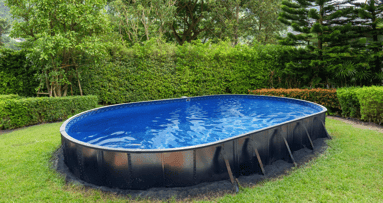 These pools come in several construction types, including steel walls, resin frames, insulated panels, or pre-formed fiberglass shells. Each has different strengths when it comes to durability, insulation, and ease of installation.
Because the top edge sits above ground, they’re often finished with surrounding decks or retaining walls to blend the pool into the space. The result is a more permanent and polished appearance without the full cost and timeline of an inground build.

Semi-Inground vs. Inground vs. Above-Ground Pools
Each pool type has a clear niche.
- Inground pools are fully excavated, highly customizable, and longest-lasting, but also the most expensive and time-intensive to build.
- Above-ground pools are the quickest and cheapest, though they look more temporary and have limited shapes.
- Semi-inground pools split the difference. They deliver an inground-style appearance and sturdy construction at a mid-range price, especially when combined with decking and stone coping.
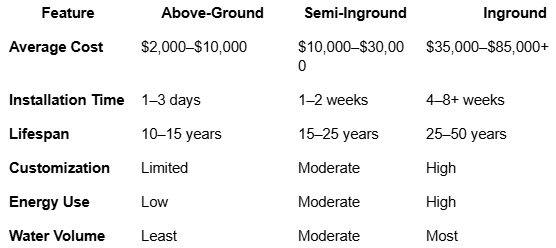
Note: Ranges vary by material, soil conditions, climate, and whether you add decking, retaining walls, or heat. If you want a highly customized freeform shape or diving depth, a full inground is a better match. If you want speed and lowest cost, above-ground wins. If you want an inground look for potentially tens of thousands less, semi-inground is the sweet spot.
Semi-Inground Pool Cost Breakdown
The cost of a semi-inground pool varies widely depending on materials, yard conditions, and how much work is
contracted out. Most budgets divide into four main categories: the pool kit itself, installation labor, required site work, and long-term maintenance.
Here’s how each typically breaks down:
Initial Purchase (Pool Kit)
- Typical Cost: $6,000–$15,000.
- Most kits include wall panels, coping, hardware, and a liner.
- Resin or hybrid kits, and insulated aluminum panels, sit at the higher end.
- Fiberglass shells cost more up front but install faster and need less upkeep.
Installation Labor
- Professional Install: $5,000–$15,000.
- Covers excavation, leveling, base prep, assembly, plumbing, and bonding.
- DIY is possible but requires experience and close attention to grading, drainage, and local codes.
Hidden Costs of Semi-Inground Pools
- Permits & Inspections: $200–$1,500+ depending on your municipality and whether separate permits are needed for electrical, plumbing, decking, or retaining walls.
- Electrical work may require new circuits, bonding, and equipment hookup. Variable-speed pumps are often required on new installs and help reduce operating costs.
- Decking or retaining walls can add $2,000–$10,000+ depending on materials used (wood, composite, pavers, stone) and how much grading is needed.
- Most jurisdictions require a pool barrier at least 48” tall with self-latching gates; check local adoption of ISPSC or IRC codes and follow CPSC safety guidelines.
- Clay soil, high water tables, or uneven slopes can require French drains, sump piping, concrete collars, or additional backfill.
Maintenance Costs
- Ongoing Budget: $500–$1,000 per year.
- Covers chemicals, test kits, small part replacements, and energy use.
- Lower water volume keeps costs below those of full inground pools.
- A variable-speed pump and well-fitted cover help reduce utility bills and chemical loss.
.jpg?width=664&height=498&name=Semi%20Inground%20Deer%20Creek%20Freeform%20(2).jpg)
The Pros of Semi-Inground Pools
Cost-Effective Luxury
- Lower Total Installed Cost: You can capture an inground-style look for 50–70% of the price of a comparable inground.
- Design Uplift: Add decking, stone coping, benches, and lighting for a resort feel without full inground complexity. Search “semi inground pool with deck” ideas and you’ll find dozens of great layouts that hide the raised wall cleanly.
Easier Installation & Versatility
- Slope-Friendly: Works where inground pools need expensive retaining structures.
- Faster Timeline: Partial excavation means quicker builds and less soil hauling. Many projects hit swim-ready in about a week or two, with decks/landscaping adding time.
Stronger Structure Than Above-Ground Models
- Engineered for Backfill: Steel-wall, resin-hybrid, and insulated panel systems are designed to handle soil pressure when partially buried.
- Depth Ratings: Many semi-inground kits allow 36–48 inches of burial. Always follow the manufacturer’s depth chart and warranty rules.
Better Energy & Water Efficiency
- Evaporation Drives Heat Loss: For outdoor pools, evaporation accounts for the majority of heat loss (around ~70%). A solar cover and windbreaks can dramatically cut heating costs.
- Efficient Equipment: ENERGY STAR® and other variable-speed pumps can reduce pumping energy by ~50–70% compared to single-speed units, lowering bills while circulating more quietly.
DIY-Friendly Kits
- Modular Builds: Many semi-inground pool kits are designed for DIY or hybrid install, with straightforward wall systems, coping, and liners.
- Lighter Site Work: Compared to a full dig, you’ll typically move less dirt and pour less concrete, which keeps equipment rentals and haul-off manageable.
Pair your semi-inground pool with one of our solar pool covers to cut evaporation, hold onto overnight heat, and reduce how often you need to run a heater.
The Cons of Semi-Inground Pools
While semi-inground pools offer a solid balance of cost, appearance, and adaptability, they’re not the right fit for every backyard or use case. Below are the main limitations to consider before committing to this style.
Limited Depth Options
- Non-Diving Pools: Most semi-inground kits are designed for water depths between 4 and 6 feet, with some offering a slight slope or shallow-to-deep profile.
- Not suitable for diving or applications needing depths over 8 feet, so go fully inground if that’s essential.
Aesthetic Constraints Without Decking
- Exposed Wall: Without surrounding features like a deck, stairs, or landscaping, the visible wall can look unfinished.
- To create a seamless appearance, plan for fascia, wraparound decking, or built-in seating around the pool.
Potential for Higher Long-Term Maintenance in Harsh Climates
- Freeze-Thaw Regions: Partial burial means the structure is exposed to shifting soil and freeze-thaw cycles. Proper drainage and wall prep are critical to avoid damage.
- High water tables increase the risk of structural pressure and may require sump lines and well-draining backfill to prevent long-term issues.
Fewer Shapes Than In-Ground Pools
- Common Shapes: Most kits come in standard shapes, which means there are fewer customization options.
- Fiberglass models offer more shape variety when installed semi-inground, but they carry a higher initial cost than steel or resin systems
For more resources on swimming pools in the winter, check out these helpful topics below!